
RETURN ON HIDDEN ASSETS
Here's how ambitious leaders can uncover overlooked value, create new strategic options, and launch their organizations onto the next growth curve
Scroll for more
Hidden Assets are "the commercial equivalent of cash in the attic."
Rory Sutherland,
-foreword to Start With What Works by Andy Bass-
Who Is this for
This approach is designed for positive, ambitious leaders with responsibility for growth and return on investment: chief executives, managing directors, business-unit leaders and others who can make decisions and commit resources.
The clients who get the most out of this are savvy and decisive, but open-minded enough to listen deeply to the organization. They suspect that frontline employees, technical specialists and other groups have more to contribute than current structures allow. They understand that middle managers are essential to execution, while also recognising that internal incentives and career concerns can make novel opportunities appear personally risky.
This is not primarily a turnaround proposition for organizations needing emergency balance-sheet restructuring, dramatic cuts or financial rescue.
It is for established organizations with real strengths but a sense that there is more: businesses that want to renew, reinvent or move onto their next growth curve.
Rooney Anand
Former CEO of Greene King Plc; Senior Independent Director, Morrisons plc
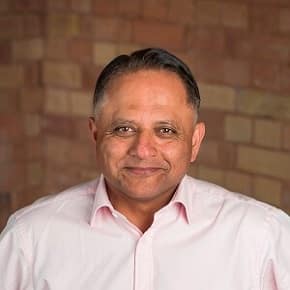
"Rather than waiting for a magic bullet, make your organization better, starting today. Andy helps you see the resources and talents you have already, but just haven’t got around to using properly or fully enough. Even better, the process creates engagement and excitement among employees, because the process honours their expertise and abilities."
The opportunity may already be inside your business
Leaders seeking to grow are often too quick to look outside. They ask what they should buy, who they should hire, which technology they should implement, or which company they should acquire. Those may all be sensible questions. But they are rarely the best first question.
The better first question is: what do we already have that we are overlooking, undervaluing, or using below its highest-value potential?
Established businesses have accumulated far more than products, property and cash. They build knowledge, relationships, reputation, data, ways of working, unique capabilities, intellectual property and capacity for judgement. Many of these are overlooked. Others are visible but taken for granted because they have become part of everyday life inside the organization.
These hidden assets can provide the raw material for new revenue, stronger differentiation, better customer value, more confident strategic choices, leading to EBIT growth and ultimately a more valuable company. The purpose of this document is to show why they are so often missed, what becomes possible when leaders learn to see them, and the four questions an organization must resolve to turn overlooked strengths into sustained commercial results.
Alex M H Smith
Bestselling Author of
No Bullsh*t Strategy

"Andy’s focus and trenchant questions have been invaluable for me. I wholeheartedly recommend him to anyone trying to turn their ideas into reality, and who don’t want to get lost, derailed, or diluted along the way."
Is a new signing the answer to all a team’s prayers?
I discussed the idea of Hidden Assets with Paul Faulkner, the former CEO of the storied English football teams Aston Villa and Nottingham Forest.
As I talked to him about the bias towards new resources, Paul started to laugh.
“This is exactly what it was like running a football team,” he explained. “I lost count of the number of times the coaches would ask me for: ‘Just one more player.’ I’d reply to them that there was little point buying even the best striker in the world if the team couldn’t gain and keep possession of the ball and then supply it to that striker. I’d urge the coaching staff to work on rethinking what we did with the existing squad. I figured that then, if we did buy an expensive new player, we’d be better able to use them. And maybe we’d find that the players we already had—including last year’s star signing that the coaches now seemed to be less enthusiastic about—could really flourish and bring us the results anyway.”
The same principle has successfully driven profitable growth in many businesses including Lego, Amazon, Lotus Cars, Cardinal Health as well as a bunch of successful but less famous companies.
You can use it too.
Jurga Žilinskienė MBE
Founder and CEO, Guildhawk

"Andy teaches you to translate your leadership message from terms that make you want to act into terms that make them want to act."
Why I have come to see businesses this way
For many years, my work has involved helping leaders improve performance without beginning from the assumption that the organization is broken. I have worked with senior teams, technical specialists, commercial leaders and frontline employees in organizations that were often already successful, but whose leaders sensed that the business could do more.


Your most profitable growth is unlikely to come from what you add next, but from the hidden assets you already possess—and finally put to work.
CONTINUE READING...
Download the full Hidden Assets eBook.

About Andy Bass
Dr Andy Bass is an independent advisor to CEOs and senior leaders of ambitious organizations, and the author of Start With What Works (Pearson).

Working Together
I help CEOs and leadership teams unlock hidden assets to achieve profitable growth, real alignment, and disciplined execution—through speaking, advisory work, and executive coaching.